• Home
  • We’re Still Here!
  • Donate
    • General Donations
    • Planned Giving
    • Grants & Sponsors
  • Who We Are
    • Why We Do What We Do
    • Board Of Directors
    • Accountability
    • Annual Report
  • Programs
    • Filter Program
    • Fundraising
    • Frequently Asked Questions (FAQ’s)
    • How Does the Filter Work?
  • Blog
  • Multimedia
    • Photos
    • Videos
    • Emails & Newsletters
  • Contact
Sign up for our emails
Clean Water for HaitiClean Water for Haiti
  • Home
  • We’re Still Here!
  • Donate
    • General Donations
    • Planned Giving
    • Grants & Sponsors
  • Who We Are
    • Why We Do What We Do
    • Board Of Directors
    • Accountability
    • Annual Report
  • Programs
    • Filter Program
    • Fundraising
    • Frequently Asked Questions (FAQ’s)
    • How Does the Filter Work?
  • Blog
  • Multimedia
    • Photos
    • Videos
    • Emails & Newsletters
  • Contact

Life and Death Responsibility

May 12, 2016

We’re going to veer away from some of the reader questions that we’ve been answering in the last few posts because there’s something that’s on my heart, and I think it’s important to talk about because it really does shape the way we do our work here in Haiti. What I want to talk with you about is the great responsibility that people like us have in the work that we do.
20140903-175-88

I think the idea of development is appealing to a lot of people. I think the majority of the human race all have an inborn desire to help their fellow man. It’s the reason that we respond with compassion when we know someone is in need. It’s the reason people get involved, initially, in development work. It’s why we have non-profit organizations for every need out there. And, it’s a good thing. But something can be good, and it can be not enough at the same time.

In the 10 years that I’ve been living and working in Haiti I’ve had plenty of opportunity to see humanitarian, missions, and development projects started. Some of them are really effective, but sadly a lot aren’t. That’s really a whole other series of posts, and isn’t what I want to focus on today. What I want to talk to you about is the fact that intentions are not enough, especially when we’re working in a capacity that directly affects people’s health.

There are a lot of household water filtration methods and tools out there. We, as an organization, have chosen to just work with one of those. We have a lot of reasons why we’ve chosen to work with the Bio-sand filters.

  • They’re something we can build in country with local materials.
  • We can use local labor in the construction, distribution and follow up – more impact for our donor dollars and helping in a broader way.
  • The technology itself is great for Haiti because it takes a lot of factors into consideration, including education levels, resource availability, culture, maintenance and overall cost in relation to effectiveness.
  • We can make them available to the entire population.

There are a lot more reasons, but those are the basics.

Like I said, there are a lot of other household water treatment options out there, and there are a lot of people implementing them all over the world, and that’s a great thing.

The problem arises when people don’t look beyond the actual implementation part. Implementation is a fancy word that we use in the industry that just means “put into use”. When we “implement” a filter we’re putting it into use in a home.

What we see happen in most cases here in Haiti is that an organization or group will decide that they want to help with the water issues here, so they look at options and decide to help get people some kind of filter. They decide what kind of filter to get, make arrangements to get a whole bunch of them, and then go and install them or distribute them. In theory this is a great and noble thing. Seriously. Where I struggle is not in the intention, but in how the whole thing gets done. How it gets implemented, if you will.

In most cases this work is being done by a group of visitors who are in country for a week or two. Often no one in the group has had any formal training on the technology itself. Yes, they may have had a crash course on how to install the filter, but most couldn’t actually tell you how it works. They couldn’t figure out what was wrong with it if it wasn’t working correctly, and they wouldn’t know how to fix it if they did know what was wrong. They come in, and maybe they’re working with local people in some capacity, but typically this is from a logistical perspective. The people here on the ground make all the arrangements for the group, and walk through the process with them.

Case in point, one January we were flying back to Haiti after our Christmas break. In the Miami airport we made ourselves comfortable in the boarding lounge, and not long after about 15 people wearing matching shirts came and sat right next to us. Their shirts were advertising that Haiti didn’t have clean water, so they were bringing it to the people. As is usual, because our family typically gets noticed, a couple of the team members started to make conversation. Eventually we got around to What do you do? We told them we run an organization that does Bio-sand filters. They got very excited and said, “That’s what we’re going to do! It’s really great. We’re going to install Bio-sand filters in people’s homes this week.” We smiled politely. Then they asked me how long we’d been doing this. “I’ve been there for 7 years” I answered. 7 months? they asked. “No, 7 years.” And then everyone felt uncomfortable and they started playing with their phones. I hadn’t been rude in the least. I’d been very kind. They felt uncomfortable because in that split second they realized that we did this every day, and they were going to do it for a week, and then leave.

Once the filters are distributed or installed, what happens then? Normally the group goes home.

Who does the family call if their filter isn’t working? Anyone? There probably isn’t anyone for them to call.

Does anyone visit the filter regularly to make sure that it’s still working correctly? In most cases the answer to this question, with any filter program is no.
20140903-041-26

Please hear me when I say this – I’m not digging at people’s intentions. It’s not about that. Good intentions start with something deeper – the desire to help people. That’s a good thing. No, it’s not about intentions. For me, for us, it’s about loving people fully and well.

Hear me out.

When we’re sick, we go to the doctor, we don’t go to the grocery store and talk to the produce guy. We don’t do that because the produce guy isn’t a doctor. He’s not trained to diagnose and help heal. Need to know how to pick out the best tomatoes? Yes. Diagnosing that nasty rash? No. It’s obvious, right? You trust someone that has training and experience to help with a specific need.

When you are sick, you recognize that the human body is fragile, in the sense that if you do the wrong thing, were diagnosed with the wrong malady or were prescribe the wrong medication it can do a lot of damage. Doctors are required to swear to and abide by the Hipocratic Oath – first do no harm. That’s why no produce guy.

When we’re working with water filtration we are firstly working with people’s health, and we should want to do the very best we can in a way that will do no harm.

That’s it. There is no way around it.

If we want to love people fully, we should do the very best we can for them, even if that means putting our own needs aside. If the very best is to give them access to a tool that can improve their health, we should do that in the very best way we can. We should not do it half way, or in a way that could potentially lead to harm. If we do something really well, sometimes that means we have to put our own needs and desires aside to make sure that happens. If the best thing is to do it ourselves, that’s great. But, if the best thing is to support an organization that is trained to do it better then we ever could, even if it means we’re a bit more removed from the process, then we should go that route. Again, if we really want to love people, it means doing what’s best for them.

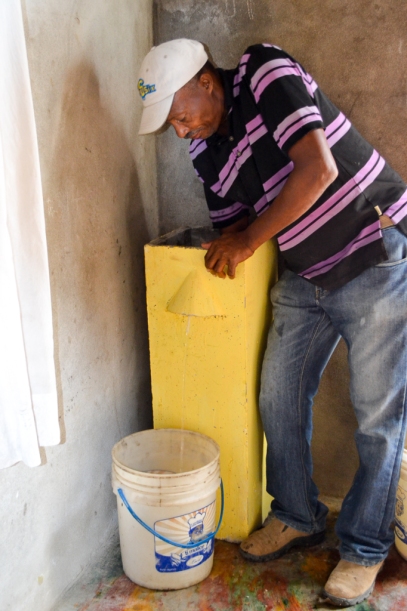
When we’re asking a family to adopt a filter, to use it every day, we’re asking them to trust us with their health. It’s not just about the idea of clean water. It’s about getting them something that won’t kill them.

Yes, I just said that. I said it because it’s true. I said it because when a filter is installed poorly, incorrectly, or doesn’t have adequate education or follow up we can literally be killing people. When we ask them to put confidence in any kind of water filter, we have a huge responsibility to make sure that it’s going to do it’s job, and do it well.

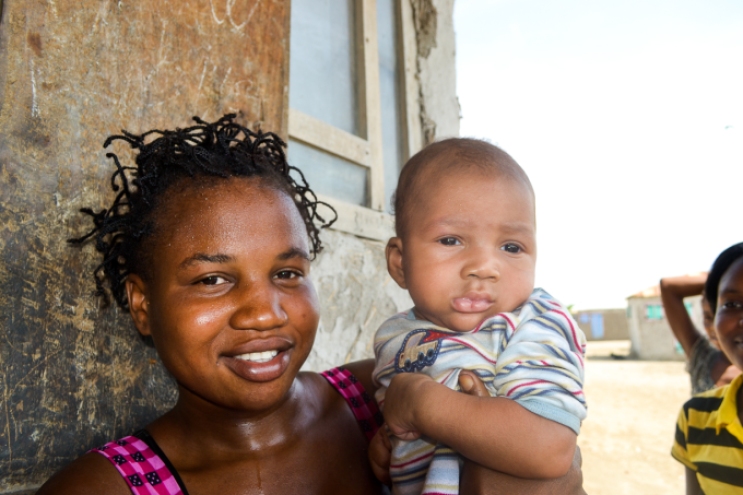
We’re asking mothers to trust that a filter is going to provide clean water for their babies. We’re asking families to trust that the filter is going to provide clean water for their older family members, or those with depleted immune systems that can’t fight off disease.
20140903-088-48

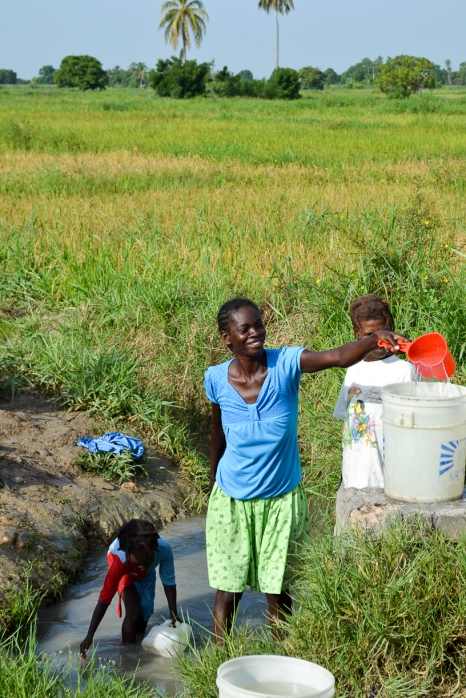
If we install a filter and the family doesn’t know how to use it properly, or it’s not installed and working properly, and they think it is, we can be causing a lot of damage.

That is a responsibility that is ever before us, and it’s one we take very seriously.

It’s the reason why every filter we install gets a form with all the needed information about the household and filter. It’s the reason those forms get entered into a data base so we can be tracking our technicians work and how we’re all doing our jobs. It’s the reason each filter gets three visits in the first year. It’s the reason each of those installations and follow up visits are done by a very well trained technician who works with the filters every. single. day. It’s the reason that we repair and replace broken filters for free. It’s the reason we welcome and get excited about research teams coming to check on our work, and listen to their results and use them to do it even better.

It’s also the reason why, when we get contacted by a well meaning group of people to ask if we can supply filters for them to install, we say no*.

We believe in our responsibility to do no harm. Water borne disease is a real thing. Illnesses, like Cholera, that can whip through a healthy persons body and kill them in 48 hours are a real thing.

If we do our job right, and well, people can trust that their filter is working properly and helping them to get healthy. If we don’t, and people are putting confidence in a filter that’s not actually properly removing all those disease causing microbes, they will get sick. And, they might die.

It’s a life and death responsibility. When people contribute to the work of Clean Water for Haiti, they can have confidence that we’re working from a place of deep love for the Haitian people that drives us to do what we do really well.

First, do no harm.

~Leslie

*We do like to tell them about our Vision Trips that will give them the opportunity to spend a week with us and work alongside our staff to learn about the whole process of building filters, and to go out on a delivery day to see how we install them and work with families. So, we’re not big meanies, we just work in a really specific way.

This post originally appeared on our old Clean Water for Haiti blog.
 

What the Numbers Mean

May 12, 2016

In my last post I answered a question sent to us by one of our Facebook followers. Today’s post is a continuation of that conversation, and it’s honestly one of the things that excites us the most about what we do. We’ve been here in Haiti for 15 years, serving families by giving them access to clean water. As you know, we choose to do that in a very focused way through building and installing water filters. But, we also have a part of our programs that involves a training school where we train other organizations to do what we do, with the hope that they’ll be able to reach parts of the country that we just physically can’t. I’ll share more about that later on on, but for now let’s jump in with todays question – what do the numbers mean?

20150323-Screen Shot 2015-03-23 at 1.41.32 PM

To start things off, we need to go back to the actual numbers themselves. In my last post I finished things off by sharing that since we opened our doors here in Haiti, Clean Water for Haiti has installed over 24,000 Bio-sand filters.

We don’t have exact numbers from our early days, probably the first 4-5 years. Because we started with a small business model, more of the focus was on training. There were filters that were installed in communities, but they were typically installed in common areas, and in batches of 2-3. The idea was to create public access to filtered water, which you would think would be a good thing, but over time we learned that this model didn’t work.

In almost every case of those community installations, when the filters were visited later on, sometimes a year down the road, and sometimes only a month or two, they were found abandoned and not being used. Sometimes they were knocked over, sometimes they had the sand pulled out… lots of things. The bottom line was that they weren’t being used for the purpose intended. As an organization we’re always trying to learn from our experiences, and use that knowledge to shape and grow what we’re doing, hopefully for the better.

Eventually Chris realized that the model wasn’t working. When you want to do development effectively you have to take into consideration all of the things that will affect how effective you are. In theory we would think that any community level focus would be welcomed, and it’s not that it wasn’t – it was that people weren’t ready for that type of community focus.

Haiti has some interesting and challenging cultural issues that hadn’t been considered initially, but greatly affected how people adopted the filters. One of the challenges here is the influence of Voodoo on culture. Voodoo is a very fear based religion. It involves cursing people and using that fear to manipulate how people interact. When you put that in a community context, it can cause a lot of distrust with neighbors. If you have an issue with someone, or they have an issue with you, they might go to the boko to put a curse on you. Poisoning sounds crazy to most of us, but it does happen here. When we were installing filters in a community space, people were afraid to use them because they didn’t know if people were tampering with things. When you factor in their culture, it makes sense. But, it’s amazing how often this isn’t considered in development projects. Recently we had a site visit with a group and as we sat talking their Haitian staff asked what some of the challenges were and why we didn’t focus things at a community level. When we told them this answer one of them kept nodding and said, “You know Haiti. I’ve never heard anyone mention this, but it’s so true!” Not gonna lie, that felt good. It meant we had figured out something that would allow us to change our programs to better reach the people.

The other major factor in why we no longer focus our efforts at a community level is that doing anything at a community level effectively means the community, as a collective, needs to be involved. In the case of the Bio-sand filters, who’s responsible for maintaining them? What if there’s a problem between that person and someone else in the community? What if they aren’t doing their job? The whole community suffers, and as we see time and time again here, whatever it was that was implemented typically falls into disrepair and stops being used.

So, with those major things in mind, Chris shifted gears with the program and decided to focus on a household level. If we only installed filters in individual homes, the filter owner had complete control over their filter. They no longer had to worry about anyone tampering with it because it would be inside their house. If they had issue with someone, or vice versa, they didn’t need to worry about their filter, and as a result their water, being used to harm them. With that, installing filters at a household level took the responsibility for maintaining the filter off a person chosen by the community or a group, and put that responsibility in the hands of the homeowner.

One more factor in this decision is that we believe in empowering people. We want to give them the opportunity to participate in the solution. By focusing on households we get to work directly with families. Parents can choose to better the health of their family by purchasing a filter. They aren’t reliant on a community system that may or may not be working. They could finally have access to clean water, and they could have control over it. It became something they did, we just provided access and education.

Once we switched to this model and started to put our focus on developing an active filter program things started falling into place. In all honesty, there were a lot of people that doubted our model way back when. It wasn’t typical for industry standards. But, we kept at it.

20141001-20141001-DSC_0265-109-2

One of our biggest challenges after we shifted to a subsidized filter program was actually doing the promotion. We would send our technicians out on motorcycles into communities to tell people about the filters, and at the time, were doing an instalment payment system. It was tough! The main reason? Our technicians were going into communities where no one knew them. And then asking people to give them money to pay for their filters. The instalment payments weren’t working because it meant revisiting people multiple times to see if they had the next instalment. It might take months for families to buy their filter, and then we had to track all of that. It was too complicated. Would you believe that it was a high school student that helped us solve this problem?

Back in early 2007 a missionary friend who runs a school said that one of his students, who we knew, asked if there would be a possibility of getting filters into his community. It was very rural, and quite a ways out, but Chris said that if he could sell 20 filters and collect the money from the families ahead of time, we would send the truck and do the delivery and installations. We thought it would take a really long time, but Kesme had 20 orders in two weeks, money and all. We had room on the truck for 25 filters, so that’s what the guys took out on that first load, and when the truck got there people were so excited that they started fighting over who got to buy the extra 5 filters. La Grange had received one of our original filters, and would you believe it was still there, and barely dripping water, but people would sit with a cup under it just to get a cup of clean water!

We told Kesme that if he wanted to keep taking orders, we would keep bringing filters. To our surprise, two weeks later he had another 70 orders. And again, people were buying the extras off the truck. Not long after those deliveries a delegation of people showed up at the mission to tell us that their community was just down the road from La Grange, and they wanted to know how to get filters too. We asked them to delegate a person to take orders, collect the money, and be responsible for contacting our staff. Soon they had their first orders of filters installed, and there was a ripple effect that started to move from one community to another, and our Community Promoter model was started. All because of one high school student who cared about his village.

We still use this Community Promoter model today. We’ve made minor tweaks over the years, but it’s still essentially the same, and is the way that we sell the majority of our filters. It’s an effective method because the promoter is from that area. People know them. Often they’re already some kind of leader that people respect. Because of that, people have confidence in giving them money to purchase their filter. If the promoter doesn’t follow through with what has been committed, then there’s recourse and accountability that can happen on a community level. We have had promoters that have abused the situation, and in every situation we work with the community in whatever way we can to solve the problem.

So, how does this translate into the original question about numbers and impact?

Through this model of Community Promoters we’ve been able to scale up our operations from installing 5-10 filters per month to over 100 filters per month. We now have the facilities to build and deliver 400 filters per month, and that’s our goal as we plan for growth over the coming years.

How many people does a filter serve each day?

Every Bio-sand filter we install typically serves 8-10 people per day. That’s the number we use to estimate impact. It’s the average size of a Haitian household. In that we recognize that some are smaller, but in many cases people are also allowing friends and family to come and filter water at their home. It’s a conservative estimate.

Lets do the math.

We know we’ve installed at least 24,000 filters since we started. Loose estimate, but probably pretty close. We started heavily tracking installations in 2010, and now have records for every single filter we install, as well as info for every follow up visit we do in the first year. This is another thing to talk about, but later…

So, if we multiply 24,000 by 10 people per filter, we get a whopping 240,000 people.

That’s exciting in and of itself, but lets look at a couple of other things.

First, that would be a single impact number. As in, at some point in the past 15 years we’ve provided clean water for a minimum of 240,000 people – one time.

But, the filters we install get used daily. We get blown away when we think about things on those terms. Daily, our program is impacting hundreds of thousands of people. We don’t typically talk those numbers simply because we know a lot of our early filters were abandoned because of holes in our program, but again, we’ve learned a lot from that and let it guide us in how we’ve developed our program.

Second, Haiti has an overall population of about 10 million people. When you look at the total number of filters that we’ve installed compared to the population, we’ve provided access to clean water for almost 2.5% of Haiti’s ENTIRE population.

It continually blows me away to think about that.

At the start of this post I mentioned that we do trainings for other organizations. When we consider all the groups that we’ve trained, some of them have gone on to produce several thousand filters each. Others are smaller and keep plugging away consistently. It’s safe to say that the other organizations that have been trained by Clean Water for Haiti have produced over 10,000 filters. More impact because of what we do.

20141001-20141001-DSC_0107-53

Now, there’s one very important thing that we haven’t talked about yet, and that’s long term effect.

Many organizations put a lot of emphasis on what we like to call “measurable outcomes” in the development world. These are things that are used to measure the “success” of a program. How many people were part of the program/trained/educated/direct recipients of a program item/service. While those numbers are good, often they’re used to give donors an idea of what’s been done with their funding, and thats all fine and good, but the question we want answered is how effective are we being over the long term?

Donors are investing their funding in our project because they want to see the health of Haitian families improve by having access to clean water. That’s not going to happen with a single use of our filters. It’s a development goal, so that means we need to look at impact over time.

How many people are still using their filters after a specific period of time?

I mentioned our tracking system for our filters, and it’s a key part of what we do. It provides us with that critical info that tells us how we’re doing over the long term. Every filter that we install has an installation form, and that initial information about the installation gets recorded on the form, then entered into a data base. Each filter we install gets visited at 1 month, 3 months, and 1 year after installation. All of the information about the filter at those visits is recorded on the sheet and in the data base. Sounds boring, but for us it’s not.

You see, after a few years of collecting data we had some really exciting information at our finger tips. We had a volunteer with us in 2012/2013, and Ryan was a smart guy, so one of the first projects we gave him was to set up our data base to pull all that info about the installed filters and their condition/state of use after the first year so we could know what our adoption rate was – the number of filters still being used after the first year. If people were still using the filter after a year, it meant they not only understood how to use it, but relied on it for meeting their daily water needs.

20141001-20141001-DSC_0280-117-2

Going into the project Chris said that if we were at an adoption rate of 60% he would be really happy. When Ryan finished pulling everything together he told us that he thought we would be really happy with the results. When we asked, partly cringing, he said, “You’re at over 95%!”

I’ve only seen Chris speechless a few times, and that was one of them. We came face to face with the reality that not only had we figured out how to do this well, we were doing it really well.

As time has gone by our numbers have stayed steady at over 95%, and in some years have been over 98%. So when we talk about impact, we can confidently say that most of our filters are still in use after the first year. That’s almost unheard of in the development world.

What we do works. The numbers don’t lie.

~Leslie

This post originally appeared on our old Clean Water for Haiti blog.
 

  • 1
  • 2
  • 3

Contact Us

We love to hear from you. Let us know what's on your mind.

Send Message

Contact

  • 1-360-567-8647
  • office@cleanwaterforhaiti.org
  • Clean Water for Haiti US
  • Box 871181, Vancouver, WA 98687
  • Clean Water for Haiti Canada
  • Box 51, Armstrong, BC V0E 1B0

Follow Us

Our Latest Blog Post

Full Speed Ahead!

December 12, 2024

Phew! Is anyone else feeling the rush of the holiday season?...

© 2026 · Clean Water for Haiti/CWH Foundation

  • Buy Highend